

Losing a tooth can affect more than just your smile—it can impact your confidence, speech, and ability to eat comfortably. The good news is that modern dentistry offers several reliable solutions to replace missing teeth. Understanding your options will help you make the best decision for your lifestyle, budget, and long-term oral health.
Why Replacing Missing Teeth Matters
When a tooth is lost, the surrounding teeth can shift out of place, leading to bite problems and jaw discomfort. Over time, bone loss can also occur in the area where the tooth is missing. Replacing missing teeth early helps maintain your facial structure, improves chewing function, and restores your smile.
Your Main Tooth Replacement Options
1. Dental Implants (The Premium, Long-Term Solution)
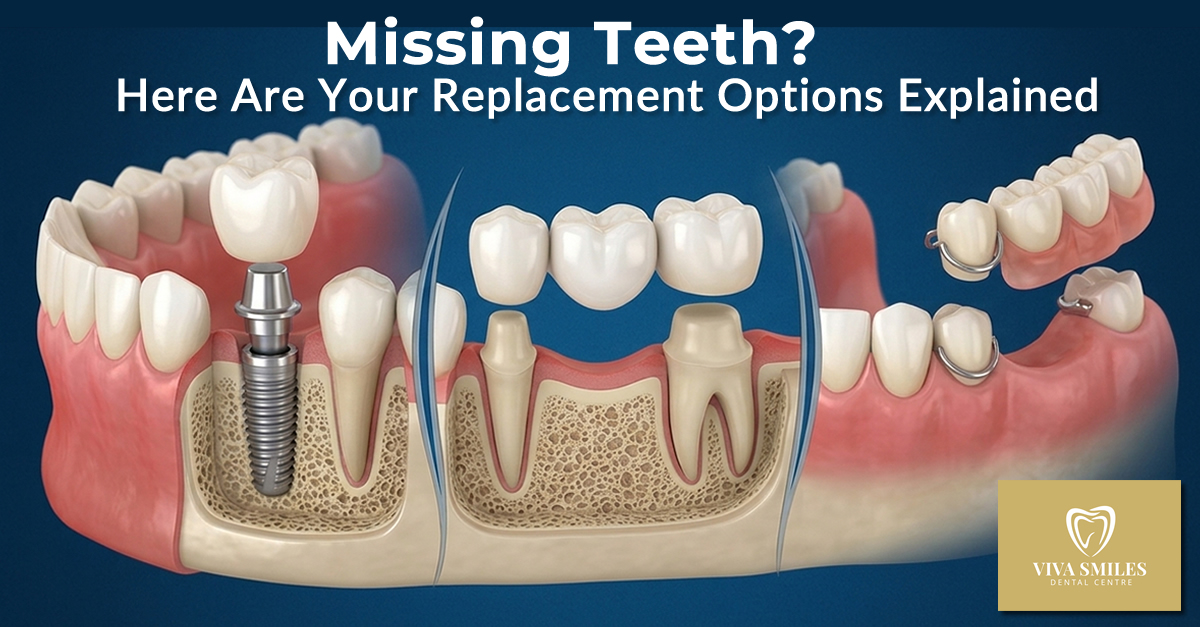
Dental implants are widely considered the gold standard for tooth replacement. They involve placing a titanium post into the jawbone, which acts as an artificial root, topped with a natural-looking crown.
Benefits:
- Feels and functions like a natural tooth
- Prevents bone loss in the jaw
- Long-lasting (can last decades with proper care)
- Does not affect neighboring teeth
Considerations:
- Higher upfront cost
- Requires a minor surgical procedure
- Healing time is needed before final placement
Best for: Patients looking for a permanent, durable, and natural-feeling solution.
2. Dental Bridges (Fixed and Functional)
A dental bridge literally “bridges” the gap created by one or more missing teeth. It is anchored onto the adjacent natural teeth or crowns.
Benefits:
- Fixed in place (non-removable)
- Restores function and appearance quickly
- More affordable than implants
Considerations:
- Requires reshaping of adjacent healthy teeth
- Does not prevent bone loss in the long term
- May need replacement after several years
Best for: Patients who want a fixed solution but may not be ready for implants.
3. Dentures (Affordable and Removable)
Dentures are removable appliances that replace multiple missing teeth. They can be partial (replacing a few teeth) or full (replacing all teeth).
Benefits:
- Most cost-effective option
- Non-invasive (no surgery required)
- Suitable for multiple missing teeth
Considerations:
- Can feel less stable or comfortable
- May require adhesives
- Needs regular adjustments over time
Best for: Patients looking for a budget-friendly or non-surgical option.
Which Option Is Right for You?
Choosing the right solution depends on several factors, including:
- Your oral health and bone condition
- Budget and long-term goals
- Number of missing teeth
- Personal preference (fixed vs removable)
While all options can restore your smile, dental implants stand out as the most advanced and long-lasting solution, especially for patients looking for a natural feel and minimal maintenance over time.
Take the First Step Toward Restoring Your Smile
If you’re dealing with missing teeth, the best next step is a professional consultation. A dentist can assess your condition and recommend the most suitable treatment plan tailored to your needs.
Book your consultation today 0745 660276 and discover the best option to restore your confidence, comfort, and smile.